
SAFETY AT THE 2025 WORLD CHAMPIONSHIPS
Purpose :
The 2025 Paragliding World Championships prompted an unusual level of outrage and calls for change from various parts of the free flight community, in large part owing to a competitor losing his life during the event. But what should be changed, and why? Everyone is entitled to an opinion, but unfortunately as a community we have very little factual evidence about what might impact safety in free flight.
Impactful change requires data.
This survey was created to collect the opinions of the pilots who were at the 2025 Worlds surrounding safety at the event. It was conducted independently of CIVL. While some of the data in it is in the process of being actioned on, other ideas and concerns have not yet been addressed.
We hope this is the first of many such efforts to understand safety in free flight.
Respondents: 89 (82 pilots, 7 other roles)
58% with >10 years competition experience
Survey Results: Pilots Felt the 2025 Worlds Was Less Safe Than Usual
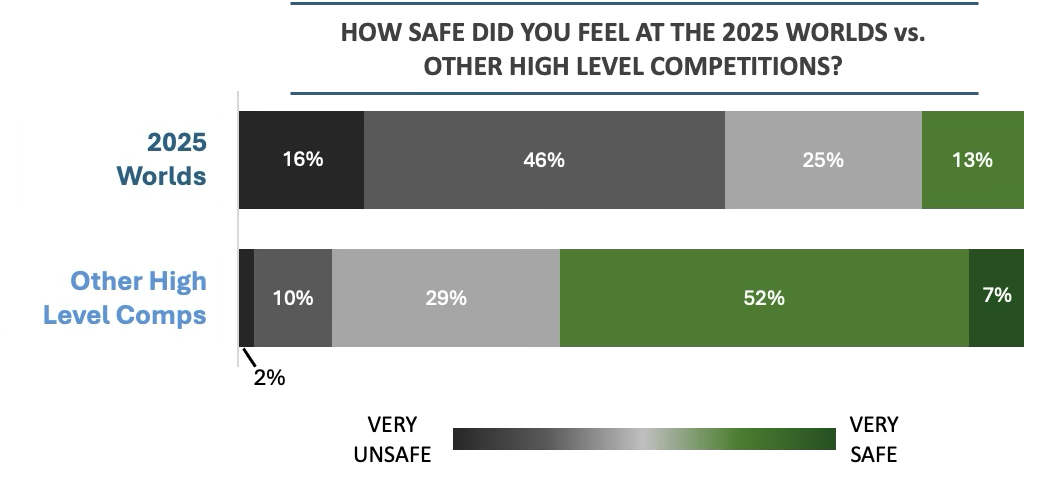
At the 2025 Worlds, 62% of respondents felt moderately or very unsafe. 65% felt more unsafe than usual at high level competitions.
This is an almost inverse relationship to perceived safety at other high level competitions (PWCs, national competitions).
Actionable insights :
- 2025 Worlds was unusual in terms of its level of perceived safety. Safer competitions are possible, and indeed perceived as more common.
- Perceived safety may differ from actual safety. Collection of objective data points over time will help us understand such nuances better.
Survey Results: Location, Weather, and Task Setting
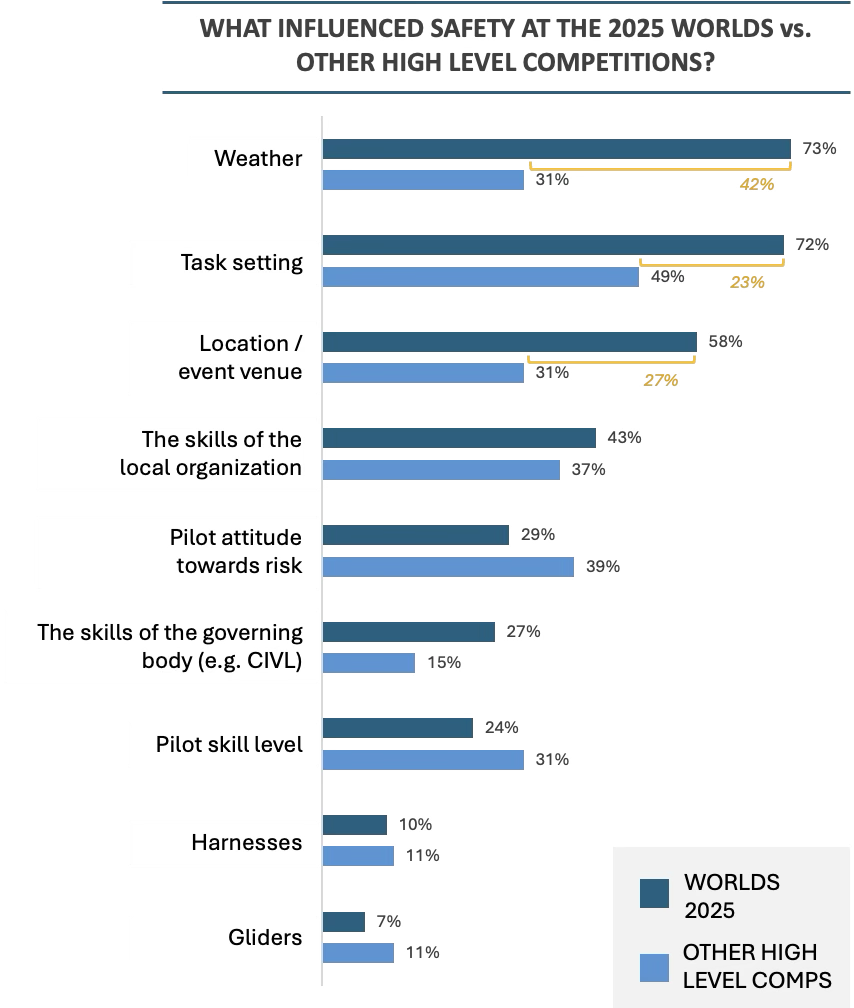
The top factors respondents felt influenced safety at the 2025 Worlds were weather, task setting, and the location of the event.
Most respondents did not feel that harnesses or gliders influenced safety at this event.
This pattern is similar but less strong for other high level competitions.
Actionable insights :
- The 2025 Worlds were less safe than respondents expected because of the location, its weather conditions, and the task setting.
- Respondents feel that changes to harnesses or gliders, or to a lesser extent pilot skill, would NOT have impacted event safety very much.
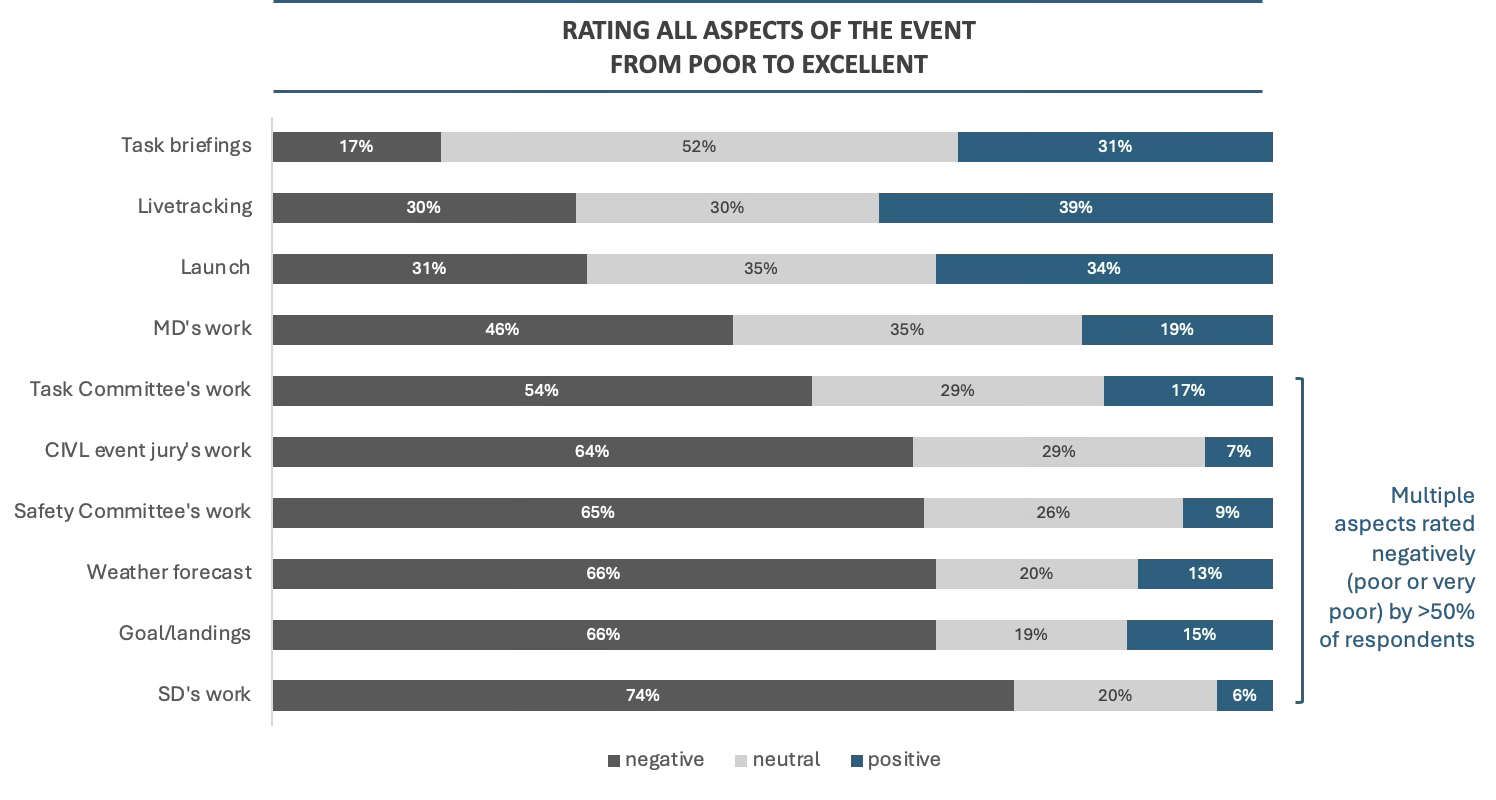
Survey Results: Overall Dissatisfaction with the Event
Potential Solutions: Venue/Location
79% said this was one of the top 3 things that would have improved safety
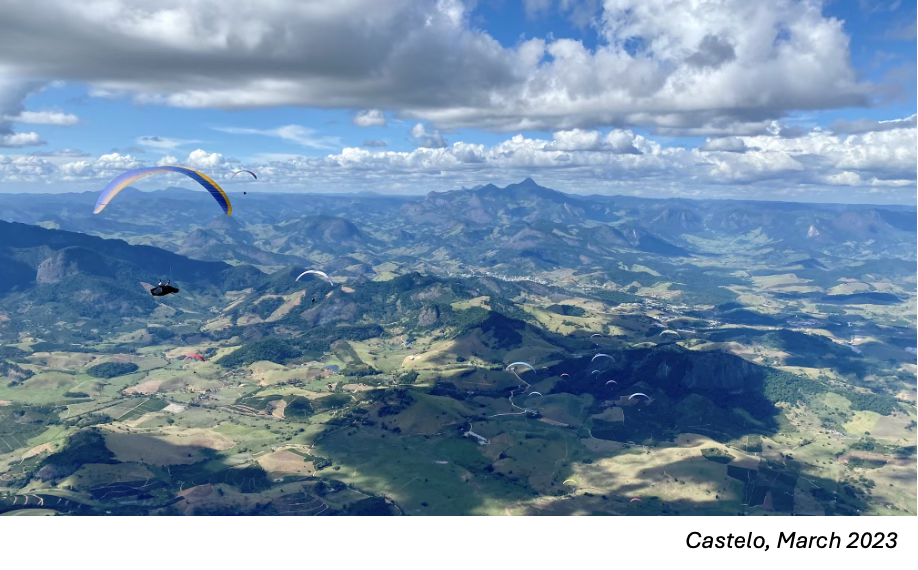
Pilots stressed the importance of selecting a good racing venue and testing it in the right season. Most did not understand why the event had moved from Andradas to Castelo.
- “Choose the place and time of the races better, it's not the first time we've flown in a good place but at the wrong time.”
- "If you land 130 pilots in terrain in 20kn, there will be incidents, this was completely predictable given location history, prior tasks and forecast.”
- “Worlds Location needs to actually be tested, needs launches in more than one direction, needs serious evaluation by independent pilots after test event.”
ACTIONABLE SUGGESTIONS:
- Pilots should vote on the location
- Potential venues should be evaluated independently using a clear location/event scoring system
- Test events must be held in the same season as the race
* Italicized comments are free text responses from the survey.
Potential Solutions: Task Management
66% said this was one of the top 3 things that would have improved safety
Pilots felt that tasks were not set well, stopped appropriately, or managed well along the course.
- “There was no consensus on the design of the task and the safety committee functioned as a task committee as well… there were 6 or 7 people arguing... I didn't feel comfortable with that situation.”
- “Needs an empowered safety committee, the ‘everyone is on safety’ is a fail.”
-“Better task management. Stopping of the tasks and communication of conditions along the task especially in goal.”
-“Goal tent placement should be made thoughtfully and with conditions in mind, so that it's in a safe location for pilots to land.”
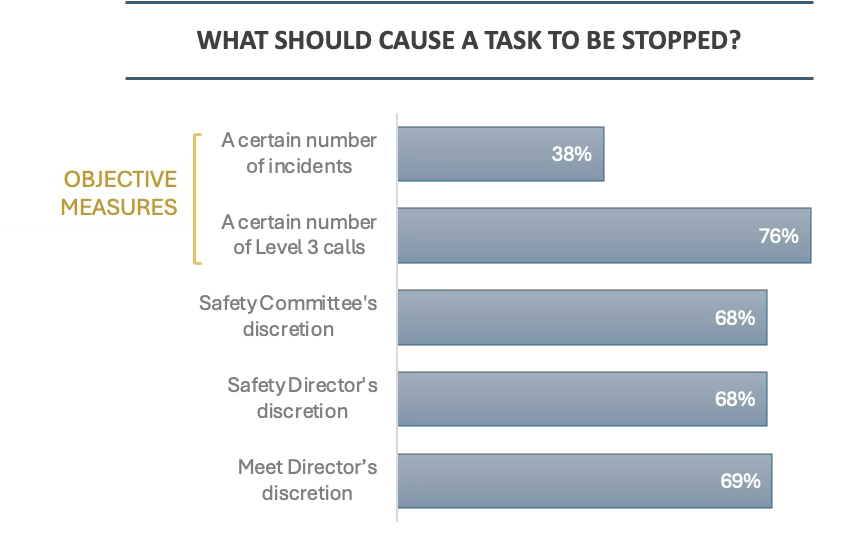
The majority of respondents (80%) felt that the organization did not respond appropriately to Level 3 calls during the event.
- “The org did not stop tasks with multiple level 3 calls until conditions deteriorated well past acceptable.”
ACTIONABLE SUGGESTIONS:
- Training and protocols for Task and Safety Committees
- Enforce verification of risk assessment of goals and waypoints ahead of time
- Objective task stop rules
- Clear responsibility and empowerment to stop tasks
- Clear definition of Safety Director’s responsibilities, including communication of changing hazards along course
Potential Solutions: Event Medical Response
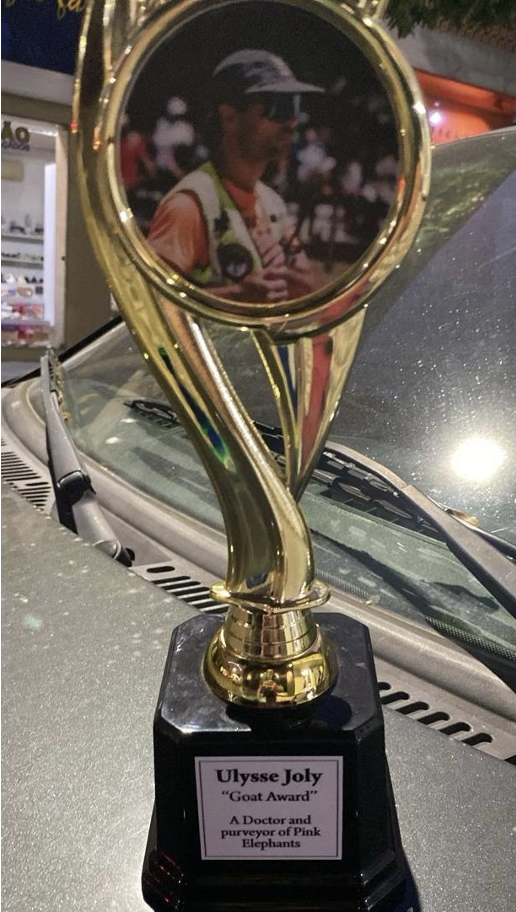
Trophy given to Dr. Ulysse Joly, French team doctor, September 2025
71% said this was one of the top 3 things that would have improved safety
Pilots felt medical staff and response was inadequate and relied on the resources brought by nations like France and Germany. Many emphasized that there are good standards and examples we can learn from.
- “Definite FAI Emergency standards have to be established based on International ICAR recommendations. ICAR=International Committee for Alpine Rescue”
- “Task setting should be done based on a venue’s medical response ability... Larger, highly staffed comps should hire a competent doctor or medical team. It should be clear which hospitals provide the best care and the pilot should be aware of these as well...”
ACTIONABLE SUGGESTIONS:
- Set clear emergency response protocols based on international standards
- Cat 1 competitions should have an emergency medicine specialist on staff
- Include available medical capabilities in event scoring and make information available to pilots prior to event
Potential Solutions: Transparency and Communication
39% said communication and cooperation between CIVL, local organizers, and pilots was one of the top 3 things that would improve safety
Pilots felt that a lack of transparency and a lack of clearly defined roles and responsibilities put CIVL and the local organization at odds with each other and the pilots.
- “I would mostly like to have transparency from CIVL as to who (how many ppl independent of the plenary/delegates) got to make the decision to move the competition, why and how its ok to threaten pilots with loosing their sporting license for questioning this choice…”
- “Level reports should be reported to CIVL. If there are events with 20 level-3 reports but tasks have not been stopped, the organisers should have good arguments.”
- "Several times since CIVL official believe they can adjust the rules to what they like best and act on top of the local organiser for no reason”
- “The safety in a given event depends heavily on the local organiser… There are no standards, guidelines nor workshops for local organisers… there is no knowledge sharing between the organisers”
ACTIONABLE SUGGESTIONS:
- Clearly and transparently communicate about problems and changes.
- Clearly define roles and responsibilities of local organizers and CIVL officials.
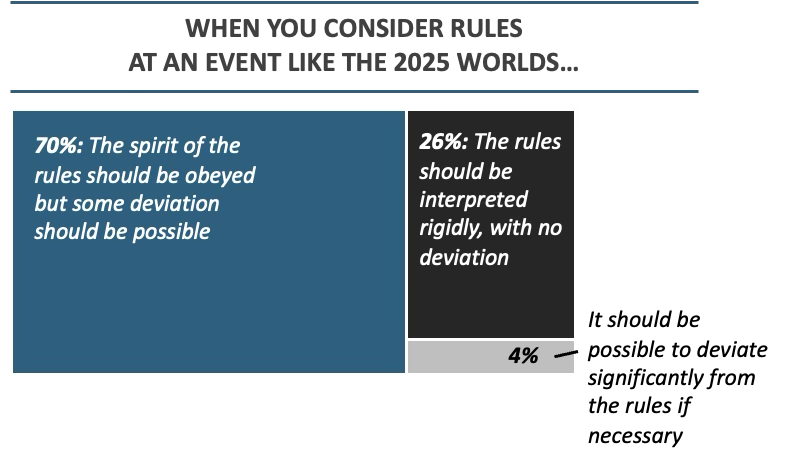
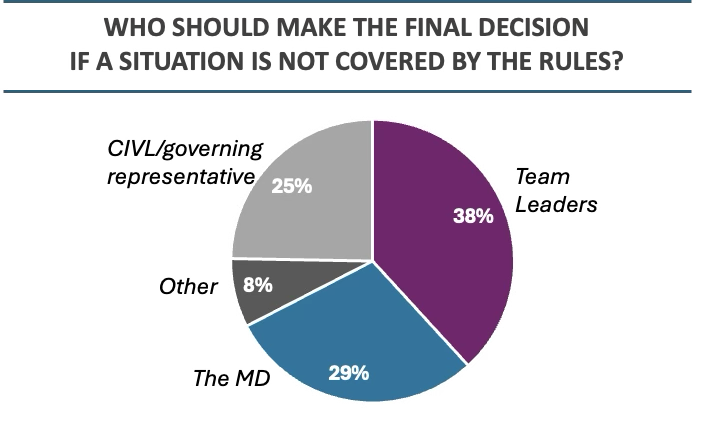
- Set protocol for situations that are not envisioned by the rules.
- Create compulsory training curricula so local organizer teams can learn and share best practices.
Potential Solutions: Promote Safe Culture, Reduce Blame
Sporting Culture
Pilots also recognize that internal pressure can impact safety (62%) and so can pressure on the organization to fly as much as possible (67%). There is acknowledgement both of personal responsibility and also the psychological effect of flying in a competition and in a group.
- “Competitions should not test who is willing to take on the most risk.”
- “I'm very much of the opinion that it's up to the pilot to decide when it's too risky to continue flying.”
- “I don't think that decisions about safety should be the pilot’s responsibility during a task/competition... Flying in a group or competition changes the safety approach of most (i would say over 90%) of the pilots.”
- “Just fly the good days, less blame for missed days.”
OTHER ACTIONABLE INSIGHTS
- Create an accident database and post-event safety surveys
- Create recommended training curricula for competition pilots
- Reconsider qualification standards for Cat 1 events
- Make improvements in equipment safety (harnesses, ballast, gliders)
In order to truly improve safety in our sport, we must acknowledge that everyone – pilots, organizers, and governing bodies – has a role in the solution.
Real improvement will require everyone’s contributions.