
This explanation about Multiple Radius Turnpoint (MRT) is linked to Bruce Goldsmith's Report "What we want" : Check it here !
A ballast practical solution:
Define a competition Task with different turnpoint's radius to tag according to your take-off weight.
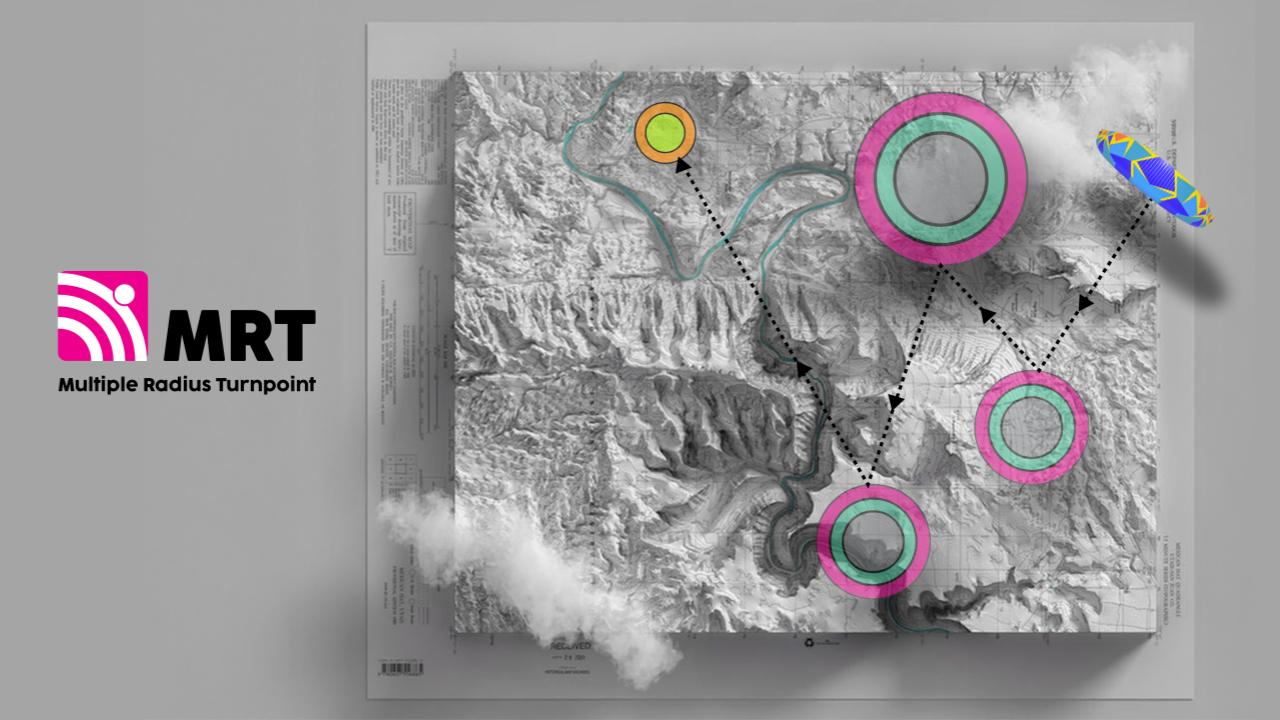
Multiple Radius Turnpoint
Weightless competition with free flying spirit.
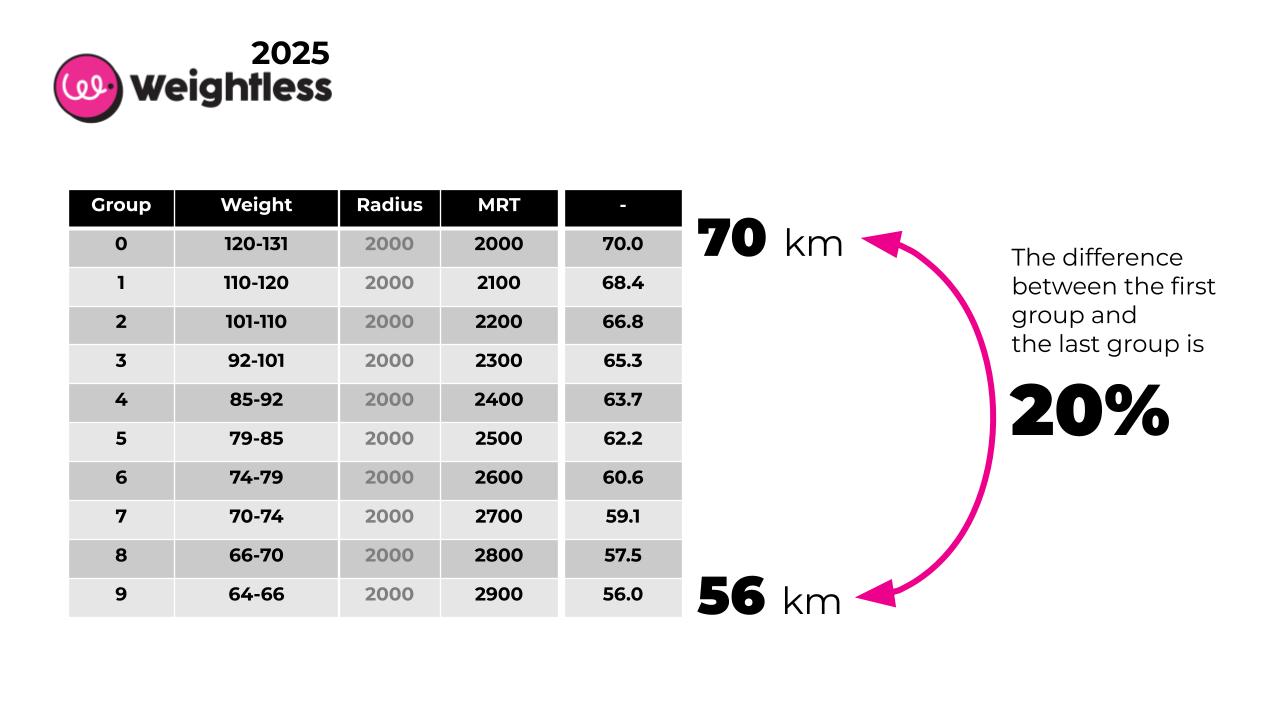
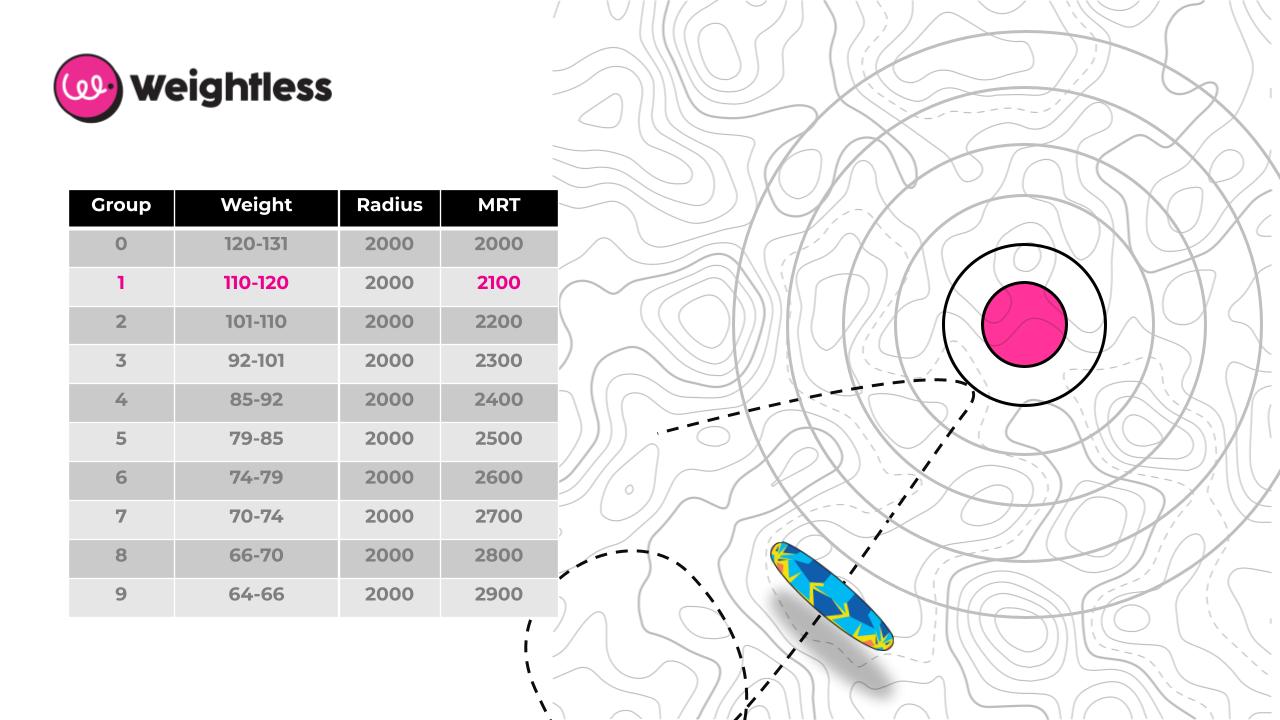
10 different groups are defined based on pilot's take off weight. Each group must tag turnpoints with a different radius. It's a compensation for weight performance. Heavier pilot will cover more distance.
Statistically controlled compensation
The software calculates automatically the distance compensation around task turnpoints. It can send a specific QR code to each participant according to their weight group. The compensation is calculated on the optimized task distance and the algorythm is complex. The difference between the lightest group and the heaviest is currently 20% of the total task distance. The compensation is checked and reviewed statistically after events.
Frequently Asked Question
Multi radius compensates for the performance difference that has been accumulated on the glides before the turnpoint. This situation is strongly influenced by the effect of size, the radius of the turnpoint will simply correct this difference.
It often happens in XC Country competition that the thermal is not directly on your route, but there is no doubt that flying a shorter task offer new opportunities to find a thermal.
It's has been tryed in the 2nd Weightless Event. This is in fact a standard handicap scoring system. The problem is lighter pilots are always behind the lead. They'll never enjoy the feeling of being in the lead gaggle or to win a day. It's just not so fun for the light pilots.
MRT is at early stage of development. Each event is much better than the last. It's a new direction in the competiton scene that could include much more pilots. What is unfair is the current competition system which reward weight and ballast. It needs to start in Cat 2 event. Post statistical analysis are performed after the event to check the compensation is correct.
Leading points are part of the scoring system that gives an advantage in favour of heavy weight or ballasted pilots. It's not a disadvantage to remove leading points, it makes the competition more fair.
Tested in Laragne (mixed terrain). It works well when turnpoints are set over flats or smaller mountains. Events have not been run in big mountains yet. There is no compensation on Start or End of speed section. A turnpoint can have no Multi Radius, it's up to the task committee.
You would need several turnpoints (3 minimum), open distance task won't work.
We need to run MRT on Cat 2 competition for a couple of years and collect feedbacks. Maybe add a compensation for a glider class as well. In the future it is possible to come with a balanced solution that fix the ballast use and the congestion.
There is a change in philosophy we need to accept. The race should be against the element and not the others. We need to move toward free flying again
SVL from Daniel Dimov supports MRT very well.
Main Strength
- Very inclusive system. All body weights and potential all glider classes in the future.
- All pilots have a chance to be first in goal.
- Automated system. Solving many headaches to task setters and organisers. Logistic kept simple.
- Field tested.
Main Critics
- Heavy responsibility on Task Setting. Complex adjustment with many variables to guarantee fairness.
- Tactics may be obfuscated. Pilots need to adjust their game.
- Philosophical changes to the race. No leading points.